
Table of Contents
Cat diarrhea can happen for something relatively simple, such as a sudden food change or stress. In other cases, loose stools can be associated with parasites, infections, gastrointestinal disease, toxins, or other health problems.
An isolated change in stool does not always mean your cat is seriously ill. What matters is how long the diarrhea lasts, how severe it is, and whether your cat has other symptoms such as vomiting, appetite loss, lethargy, weight loss, dehydration, or blood in the stool.
Cornell Feline Health Center notes that diarrhea can be short-lived and relatively harmless in some cats, but persistent or recurrent diarrhea may also be associated with significant underlying disease.
This article is for educational purposes only and does not replace an examination by a veterinarian. Only a veterinary professional can determine why your cat has diarrhea and recommend appropriate treatment.
What Is Diarrhea in Cats?
Diarrhea is stool that is softer, looser, or more watery than normal and may occur more frequently than your cat’s usual bowel movements.
It is important to remember that diarrhea itself is a symptom, not a disease.
When material moves through the intestines too quickly, there may not be enough time for normal absorption of water, nutrients, and electrolytes. The result can be frequent, loose, or watery stool.
Depending on the cause, you may also notice:
- mucus in the stool;
- blood;
- unusual color;
- stronger-than-normal odor;
- increased urgency;
- accidents outside the litter box.
A single soft stool is different from repeated watery diarrhea throughout the day.
Why Does My Cat Have Diarrhea?
There are many possible causes of cat diarrhea, ranging from temporary digestive upset to conditions that require veterinary treatment.
Here are some of the more common possibilities.
1. A Sudden Change in Food
A rapid change in diet can upset a cat’s gastrointestinal system.
Examples include:
- switching food brands suddenly;
- changing from dry to wet food;
- introducing a new protein or flavor;
- giving unfamiliar treats;
- allowing the cat to eat food they are not accustomed to.
Cornell identifies abrupt dietary changes as one potential cause of short-term diarrhea in cats.
If you need to change your cat’s regular diet, a gradual transition is generally easier on the digestive system than replacing the old food all at once.
However, do not automatically assume that diarrhea is caused by food simply because a diet change happened recently. If symptoms persist or other warning signs appear, veterinary evaluation is appropriate.
2. Eating Something Unusual
Cats sometimes eat things they should not.
A curious cat may get into:
- spoiled food;
- garbage;
- plants;
- table scraps;
- unfamiliar treats;
- household substances.
Some substances may only irritate the digestive tract, while others can be toxic.
If diarrhea appears after your cat may have eaten something unusual, try to identify exactly what they could have reached.
If you suspect poisoning, contact a veterinarian promptly. Cornell lists diarrhea, vomiting, lethargy, abnormal breathing, seizures, and other signs among possible manifestations of feline poisoning.
3. Stress
Stress can affect the digestive system.
Some cats may develop temporary loose stools after events such as:
- moving to a new home;
- traveling;
- boarding;
- introducing another animal;
- major household changes;
- veterinary visits.
Cornell notes that stressful situations can produce short-lived diarrhea in some cats.
Still, persistent diarrhea should not automatically be blamed on stress without considering other causes.
4. Intestinal Parasites
Parasites are an important potential cause of diarrhea, especially in kittens and cats with outdoor exposure.
Feline gastrointestinal parasites can include organisms such as:
- roundworms;
- hookworms;
- Giardia;
- coccidia;
- other intestinal parasites.
Possible signs can include diarrhea, vomiting, appetite changes, poor coat condition, weight loss, or blood or mucus in the stool.
Your veterinarian may recommend a stool examination or other testing.
Avoid randomly giving deworming medication based only on diarrhea. Different parasites may require different diagnostic and treatment approaches.
5. Food Intolerance or Food Allergy
Some cats can develop gastrointestinal signs related to food.
A food-related reaction may cause diarrhea and sometimes other symptoms.
Determining whether food is truly responsible is not always straightforward, because many unrelated gastrointestinal diseases can produce similar symptoms.
If your veterinarian suspects a dietary cause, they may recommend a controlled diet trial rather than repeatedly changing foods at home.
6. Infection
Bacterial, viral, or protozoal infections can cause diarrhea.
The specific risks vary depending on factors such as:
- age;
- vaccination status;
- environment;
- outdoor access;
- exposure to other animals.
Cornell’s feline diarrhea diagnostic protocols include testing for several infectious organisms and parasites when clinically appropriate.
Kittens may become dehydrated more quickly than healthy adult cats, so persistent diarrhea in a young kitten deserves particular attention.
7. Inflammatory Gastrointestinal Disease
Chronic or recurrent diarrhea may be associated with inflammation of the gastrointestinal tract.
For example, feline inflammatory bowel disease can cause:
- diarrhea;
- vomiting;
- weight loss;
- decreased appetite;
- lethargy;
- sometimes blood in the stool.
Cornell notes that diagnosing inflammatory bowel disease requires investigation because its signs overlap with many other disorders.
This is why persistent diarrhea should not simply be treated as a sensitive stomach without veterinary evaluation.
8. Disease Outside the Intestines
Not every cause of diarrhea begins in the bowel itself.
Cornell notes that recurrent or prolonged diarrhea can sometimes accompany conditions involving other organs or systems, including liver, kidney, thyroid, immune, infectious, or neoplastic disease.
This becomes especially relevant if diarrhea occurs together with:
- weight loss;
- increased thirst;
- appetite changes;
- vomiting;
- weakness;
- significant changes in behavior.
Your veterinarian may recommend bloodwork, urinalysis, fecal testing, imaging, or other tests depending on the overall picture.
What Does Cat Diarrhea Look Like?
Not every abnormal stool looks the same.
Pay attention to consistency, frequency, color, mucus, and blood.
Soft Stool
A stool may still have some shape but be much softer than normal.
One isolated soft bowel movement may not be the same situation as repeated watery diarrhea.
Watery Diarrhea
Very loose or watery stool contains more fluid and may occur several times throughout the day.
Repeated watery diarrhea increases the concern for fluid loss and dehydration.
Mucus in Cat Stool
Mucus may appear as a slippery or jelly-like coating.
It can occur with irritation or inflammation of the lower intestinal tract, but appearance alone cannot identify the cause.
Blood in Cat Diarrhea
Blood deserves attention.
Bright red blood may originate relatively low in the gastrointestinal tract, while darker or black, tar-like stool can indicate digested blood.
Do not attempt to diagnose the source based only on color.
Contact a veterinarian if you notice significant blood or black, tarry stool.
Cat Has Diarrhea but Is Acting Normal
One of the searches we found is essentially:
“My cat has diarrhea but is acting normal.”
A cat may have a short episode of loose stool while still eating, playing, grooming, and behaving normally.
That is more reassuring than diarrhea accompanied by serious illness—but it does not make persistent diarrhea automatically harmless.
Cornell advises seeking veterinary care when diarrhea lasts more than a day or two and is accompanied by systemic signs such as poor appetite, lethargy, or vomiting.
Keep track of:
- how many bowel movements occur;
- stool consistency;
- whether the diarrhea is improving;
- appetite;
- water intake;
- behavior;
- vomiting.
If diarrhea continues, becomes more severe, or other symptoms develop, contact your veterinarian.
Cat Diarrhea and Vomiting
Diarrhea and vomiting together deserve more attention than an isolated soft stool.
Both symptoms can increase fluid loss.
Gastrointestinal inflammation can produce vomiting, diarrhea, abdominal discomfort, and other clinical signs.
Contact a veterinarian promptly if your cat:
- repeatedly vomits;
- has repeated watery diarrhea;
- cannot keep water down;
- refuses food;
- becomes lethargic;
- seems painful;
- has blood in vomit or stool.
If vomiting is the main problem, our guide about cat throwing up covers that symptom in more detail.
Cat Diarrhea and Not Eating
A cat with diarrhea may temporarily have a reduced appetite, but refusing food deserves attention.
This is especially important if your cat already has:
- repeated diarrhea;
- vomiting;
- weakness;
- dehydration;
- weight loss.
Cats should not simply be allowed to go for prolonged periods without eating while waiting for gastrointestinal symptoms to resolve.
If appetite loss is significant, our guide Cat Not Eating: Causes and When to Worry explains when decreased food intake becomes concerning.
Can Cat Diarrhea Cause Dehydration?
Yes.
Diarrhea causes fluid loss, and repeated or severe diarrhea can contribute to dehydration.
Watch for changes such as:
- reduced energy;
- decreased interest in food;
- unusually dry or sticky gums;
- weakness;
- reduced urination;
- worsening general condition.
Severe or prolonged diarrhea may require veterinary treatment and fluid support. VCA notes that significant diarrhea can result in dehydration and may require intravenous fluids in more serious cases.
What Should You Observe?
Before speaking with your veterinarian, gather as much useful information as possible.
Note:
- when the diarrhea started;
- how many bowel movements occur;
- whether the stool is soft or completely watery;
- whether there is mucus;
- whether you see blood;
- stool color;
- whether your cat is vomiting;
- whether your cat is eating;
- whether your cat is drinking normally;
- whether there has been weight loss;
- whether your cat seems tired or weak;
- whether food recently changed;
- whether your cat may have eaten something unusual;
- whether medications were recently started;
- whether another cat in the home also has diarrhea.
If several cats are using the same litter boxes, first determine which cat is affected if possible.
Taking a photo of an unusual stool can sometimes help your veterinarian understand what you have observed.
Your veterinarian may also ask you to bring a fresh stool sample.
When Should You Call the Veterinarian?
Contact your veterinarian if diarrhea:
- is frequent or severe;
- continues beyond a short period;
- becomes progressively worse;
- contains significant blood;
- appears black or tarry;
- occurs together with repeated vomiting;
- is accompanied by appetite loss;
- occurs with lethargy or weakness;
- is accompanied by weight loss;
- appears to be causing dehydration.
Cornell specifically recommends veterinary care as soon as possible when diarrhea persists longer than a day or two and the cat also has signs such as poor appetite, lethargy, or vomiting.
A kitten, older cat, or cat with an existing medical condition may warrant earlier evaluation.
When Is Cat Diarrhea an Emergency?
Seek urgent veterinary attention if your cat:
- appears severely weak or collapses;
- has substantial blood loss;
- has black, tarry stool;
- repeatedly vomits and cannot keep water down;
- appears severely dehydrated;
- has difficulty breathing;
- may have eaten a toxin;
- may have swallowed a foreign object;
- seems to be in severe pain;
- rapidly becomes worse.
Do not wait for a particular number of bowel movements when your cat is clearly becoming ill.
What Can I Do at Home?
For a mild, recent episode in an otherwise healthy adult cat, careful observation may be reasonable while you make sure fresh water remains available.
Keep the situation simple.
You can:
- keep fresh water available;
- avoid introducing new treats or foods;
- keep the litter box clean so stool can be monitored;
- note how often diarrhea occurs;
- maintain a calm environment;
- contact your veterinarian if the problem persists or worsens.
Dietary management for diarrhea depends on the cat and the underlying cause.
Rather than starting a prolonged fast or changing to an improvised diet on your own, ask your veterinarian what feeding approach is appropriate—particularly if your cat is also refusing food.
Do Not Restrict Water
A cat with diarrhea can lose water and electrolytes.
Do not reduce access to drinking water simply because you think your cat is visiting the bowl more often.
Fresh water should remain readily available.
If your cat is drinking unusually large amounts in addition to having diarrhea, mention that to your veterinarian because changes in thirst can provide useful diagnostic information.
What Not to Give a Cat With Diarrhea
Do not give your cat human anti-diarrheal medications or other over-the-counter treatments without veterinary guidance.
Some medications that people commonly use can be inappropriate or harmful to cats.
Cornell specifically warns that certain over-the-counter medications used for diarrhea can be harmful to cats.
Also avoid giving:
- leftover medications from another animal;
- antibiotics without a prescription;
- dewormers chosen at random;
- supplements simply because they are marketed for digestive problems.
Treatment depends on the cause.
How Is Cat Diarrhea Diagnosed?
If diarrhea persists or your cat has other symptoms, your veterinarian will usually begin with the history and physical examination.
Depending on the situation, testing may include:
- stool examination;
- parasite testing;
- bloodwork;
- urinalysis;
- infectious disease testing;
- X-rays;
- ultrasound;
- other diagnostic procedures.
Cornell’s diagnostic plans for feline diarrhea include fecal testing for parasites and several infectious organisms when appropriate.
Not every cat needs every test.
The diagnostic approach depends on factors such as age, severity, duration, exposure history, and other clinical signs.
Frequently Asked Questions
Why Does My Cat Have Diarrhea?
There are many possible causes, including a dietary change, stress, parasites, infection, food intolerance, toxins, inflammatory gastrointestinal disease, and other medical conditions.
The duration and presence of other symptoms help determine how concerning the situation may be.
My Cat Has Diarrhea but Seems Fine. Should I Worry?
A brief episode in an otherwise normal adult cat may resolve.
However, monitor stool frequency, appetite, drinking, activity, and whether the diarrhea improves.
Persistent, worsening, or recurrent diarrhea deserves veterinary evaluation.
How Long Is Too Long for Cat Diarrhea?
There is no single cutoff that applies to every cat.
Cornell recommends seeking veterinary care when diarrhea persists longer than a day or two and is accompanied by poor appetite, lethargy, vomiting, or other systemic signs.
Seek help sooner if your cat appears significantly ill.
Can Changing Cat Food Cause Diarrhea?
Yes.
An abrupt dietary change can trigger temporary diarrhea in some cats.
Gradual food transitions are generally preferable.
Can Worms Cause Diarrhea in Cats?
Yes.
Several gastrointestinal parasites can cause diarrhea in cats, including roundworms, hookworms, Giardia, and other organisms.
A veterinarian can recommend appropriate testing and treatment.
Should I Give My Cat Human Diarrhea Medicine?
No, not without veterinary instruction.
Some over-the-counter medications can be unsafe for cats, and treating diarrhea without knowing the cause can complicate the situation.
What if My Cat Has Diarrhea and Is Not Eating?
Diarrhea together with significant appetite loss deserves closer attention.
Contact your veterinarian, particularly if food refusal persists or your cat also has vomiting, weakness, dehydration, or other signs of illness.
Your Cat’s Normal Litter Box Habits Matter
You may not inspect every bowel movement your cat produces—and normally there is no reason to.
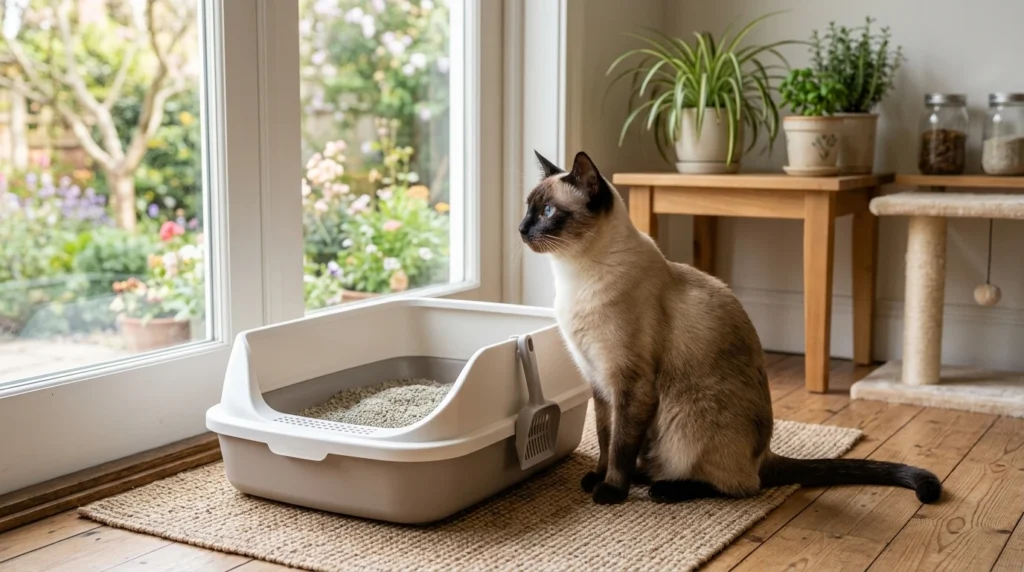
But when something changes, the litter box provides useful information.
Perhaps your cat normally has one predictable, well-formed bowel movement each day and suddenly starts producing several loose stools.
That change matters.
Look at the whole cat, not just the stool:
appetite, water intake, vomiting, weight, energy, behavior, and litter box habits.
A short-lived episode may resolve without becoming a major problem.
But cat diarrhea that persists, repeatedly returns, becomes severe, or appears together with other warning signs should be evaluated by a veterinarian.
Sources Consulted
- Cornell Feline Health Center — Diarrhea
Cornell Feline Health Center — Gastrointestinal Parasites of Cats
Cornell Animal Health Diagnostic Center — Feline Diarrhea Diagnostic Plan