
Table of Contents
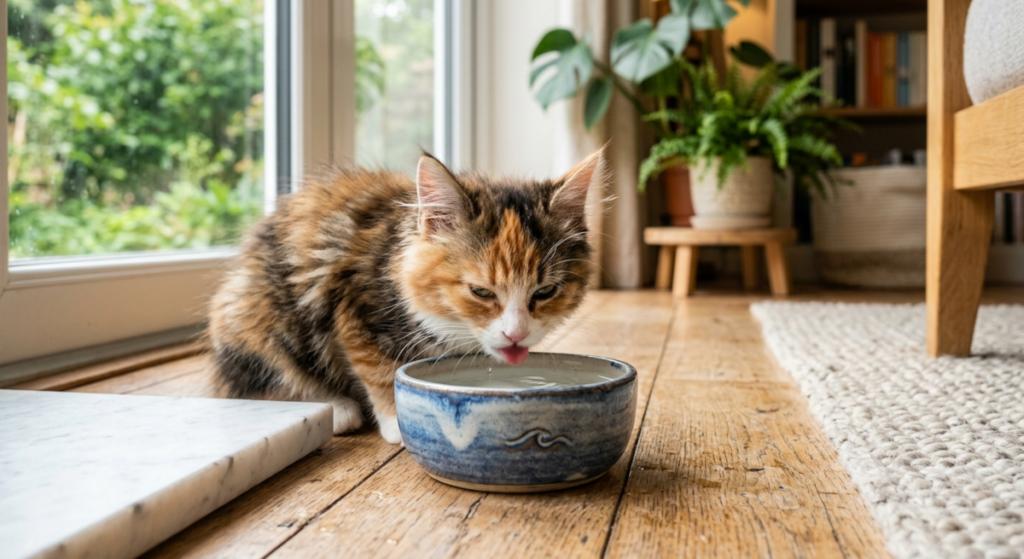
A cat drinking a lot of water may simply be reacting to a change in diet, warmer weather, or a new drinking fountain. But increased thirst can also be a sign that something in your cat’s health has changed.
What matters most is whether your cat is drinking more than usual for them, whether the change continues, and whether it appears together with other signs such as increased urination, weight loss, appetite changes, vomiting, or lower energy.
This guide will help you understand what to watch for and when increased thirst deserves veterinary attention.
This article is for educational purposes only and does not replace an examination by a veterinarian. Only a veterinary professional can examine your cat, recommend appropriate tests, and determine the cause of increased thirst.
Is My Cat Really Drinking More Water?
Before assuming something is wrong, start with a simple question:
Is your cat actually drinking more than before, or are you simply noticing their water intake more closely?
It is not always easy to tell.
For example, you may have replaced a small bowl with a transparent water fountain. Suddenly, it becomes much easier to see how much water disappears throughout the day.
The same can happen if you have recently started checking the bowl more often or refilling it on a regular schedule.
One simple way to monitor water intake is to put a known amount of water in the bowl in the morning and check how much remains at the end of the day.
Do this for several days, keeping in mind that some water may evaporate or be spilled.
If you have more than one cat, measuring an exact amount becomes much harder because you cannot easily tell which cat drank the water. In that situation, watching which cat visits the water bowl more often may be more useful than trying to calculate an exact volume.
The most important comparison is with your cat’s own normal behavior.
This article is specifically about a cat that has started drinking more water than they normally do.
Why Is My Cat Drinking So Much Water?
There are relatively simple reasons why a cat may start drinking more, but increased thirst can also be associated with medical conditions.
Instead of looking only at the water bowl, think about what else may have changed in your cat’s daily life.
Has Your Cat Started Eating More Dry Food?
This is one of the first things worth checking.
Wet cat food contains a large amount of water. Dry food contains much less moisture.
Because of this, a cat that previously ate a lot of wet food but has recently switched to mostly dry food may naturally begin visiting the water bowl more often.
In other words, your cat may not necessarily have developed abnormal thirst. Some of the water they previously obtained through food now has to come from the bowl.
If you recently changed your cat’s diet, consider whether the increase in drinking began around the same time.
Is the Weather Warmer?
You may also notice changes in water intake during warmer weather.
Your cat may seek cooler areas of the home, become less active during the hottest part of the day, and drink somewhat more water.
By itself, this does not automatically indicate a health problem.
However, there is an important difference between drinking a little more during a hot period and suddenly visiting the water bowl repeatedly throughout the day without an obvious explanation.
A noticeable change from your cat’s normal pattern deserves more attention.
Has Anything Changed in Your Cat’s Routine?
Sometimes the explanation is something that changed inside the home.
A new bowl may encourage your cat to drink more simply because they prefer its shape, location, or material.
A running-water fountain may also attract some cats and increase how often they drink.
Changes in meal size, food type, or feeding schedule can affect water intake as well.
When trying to understand a change in drinking habits, consider what else changed around the same time.
When Can Increased Thirst Be a Sign of a Health Problem?
This is where it becomes important to look beyond the water bowl.
Persistent increased thirst in cats can occur with certain medical conditions, particularly when increased drinking is accompanied by increased urination.
Conditions a veterinarian may investigate include:
- kidney disease;
- diabetes mellitus;
- hyperthyroidism;
- other disorders that affect fluid balance.
This does not mean that a cat drinking more water has one of these diseases.
The point is to avoid the opposite mistake: noticing a major change for weeks and assuming your cat has simply developed a strong preference for water.
You cannot diagnose the cause at home.
Depending on your cat’s age, history, diet, and other symptoms, a veterinarian may recommend a physical examination, blood tests, urinalysis, or other diagnostic tests.
Check the Litter Box Too
The water bowl tells only half the story.
If you have noticed that your cat is drinking more, pay attention to the litter box as well.
Ask yourself:
- Are the urine clumps larger than before?
- Are you cleaning the litter box more often?
- Does your cat appear to be producing more urine?
- Has the number of urine clumps changed?
Increased drinking and increased urine production often occur together, and that information can be very useful during a veterinary visit.
However, there is an important distinction between producing a larger amount of urine and repeatedly trying to urinate while producing little or no urine.
Those are very different situations.
If your cat repeatedly enters the litter box, strains to urinate, and produces only a few drops or no urine at all—especially if your cat is male—this may be a veterinary emergency.
What Else Should You Watch For?
You do not need to turn your cat’s routine into a complicated investigation.
A few observations can provide valuable information.
Pay attention to:
- whether your cat is visiting the water bowl more often;
- when you first noticed the change;
- whether it appeared suddenly or gradually;
- whether your cat is urinating more;
- whether urine clumps are larger;
- whether appetite is normal;
- whether your cat seems hungrier than usual;
- whether your cat is eating less;
- whether there has been weight loss;
- whether your cat seems quieter or more tired;
- whether your cat is vomiting;
- whether the coat looks different or less well groomed;
- whether food has recently changed;
- whether your cat started taking a medication;
- whether the temperature or household routine changed.
Your cat does not need to have all of these signs.
The goal is to determine whether increased thirst appeared by itself or whether other things changed at the same time.
If you need to see a veterinarian, these observations can help explain what has been happening.
Cat Drinking a Lot of Water and Peeing a Lot
A cat drinking a lot of water and peeing a lot deserves particular attention.
If your cat is drinking more because the body is losing more fluid through urine, you may notice changes both at the water bowl and in the litter box.
The bowl may empty faster while urine clumps become larger or more numerous.
When this pattern continues, it is worth contacting a veterinarian.
That becomes even more important if you also notice:
- weight loss;
- appetite changes;
- vomiting;
- changes in activity;
- changes in behavior.
Persistent increased drinking and urination are signs worth investigating rather than simply monitoring indefinitely.
Cat Drinking a Lot of Water and Losing Weight
If increased thirst occurs together with unexplained weight loss, this combination deserves veterinary attention.
Conditions such as diabetes and hyperthyroidism can be associated with increased thirst and urination along with changes in weight or appetite.
However, there are other possible causes, and similar signs can occur with different medical conditions.
The important point is not to diagnose the disease yourself.
The combination of increased thirst and weight loss is useful information to bring to your veterinarian.
What If My Cat Is Eating More but Still Losing Weight?
This is another important detail to mention during a veterinary visit.
Sometimes the change is not simply:
“My cat is drinking more water.”
You may also notice that your cat asks for more food, eats normally, or appears unusually hungry while continuing to lose weight.
When several changes occur together, they can help the veterinarian decide which conditions should be investigated.
The opposite situation matters too.
Increased thirst accompanied by a loss of appetite also deserves attention.
When Should I Take My Cat to the Vet?
If you have noticed a real and persistent increase in your cat’s water intake, it is reasonable to discuss it with a veterinarian even if your cat still appears well.
Veterinary evaluation becomes particularly important if your cat:
- is clearly drinking more water than usual;
- is producing more urine;
- is losing weight;
- has a significant change in appetite;
- seems unusually quiet or lethargic;
- has started vomiting frequently;
- has changes in coat condition or behavior;
- is older and has developed unexplained increased thirst;
- has several of these changes at the same time.
You do not have to wait until your cat appears severely ill before mentioning a persistent change.
Many health problems can begin with relatively subtle signs.
Because you know your cat’s normal routine, you may notice something has changed before more obvious symptoms appear.
Emergency: Your Cat Is Trying to Urinate but Can’t
There is one situation that deserves special attention because it can be mistaken for a cat simply “peeing more.”
If your cat repeatedly enters the litter box, strains, appears uncomfortable, and produces only a few drops or no urine at all, seek veterinary care immediately.
This is especially concerning in male cats.
Difficulty or inability to urinate can indicate a urinary obstruction, which is a medical emergency.
Do not wait until the next day to see whether the problem improves.
Do Not Restrict Your Cat’s Water
If your cat appears to be drinking “too much,” it may seem logical to limit how much water is available.
Do not do this.
If a medical condition is causing the body to lose more fluid, increased thirst may be the body’s way of trying to compensate for that loss.
Your cat should continue to have free access to clean, fresh water.
The goal is to understand why your cat is drinking more, not to prevent them from drinking.
What Not to Do
While you are trying to understand what has changed:
- do not limit access to water;
- do not remove the water bowl for part of the day;
- do not suddenly change the entire diet in an attempt to “fix” the thirst;
- do not give medications without veterinary guidance;
- do not ignore a clear and persistent increase for weeks;
- do not assume increased thirst is normal simply because your cat is getting older.
If veterinary care is needed, make a note of approximately when you first noticed the change and mention any other changes that occurred around the same time.
How Much Water Should a Cat Drink Per Day?
This sounds like a simple question, but a single number can be misleading.
A cat’s total daily water intake depends on several factors, including:
- body weight;
- diet;
- temperature;
- activity;
- how much water is already present in the food.
A cat that eats mostly wet food may drink very little directly from a bowl while still consuming an appropriate amount of water overall.
A cat eating mainly dry food generally needs to obtain a larger proportion of their water directly from the bowl.
As a reference, International Cat Care considers water consumption above approximately 100 milliliters per kilogram of body weight per day to be clearly increased.
For a 4 kg cat, that would mean more than approximately 400 ml per day.
However, this number should not be used by itself to decide whether everything is normal.
A clear change from your own cat’s usual pattern matters too, even if you cannot accurately measure every milliliter they drink.
Frequently Asked Questions
Does Dry Food Make Cats Drink More Water?
It can.
Dry food contains much less water than wet food, so cats eating mainly dry food need to obtain a greater proportion of their daily hydration directly from drinking water.
If your cat recently switched from a diet containing plenty of wet food to mostly dry food, increased visits to the water bowl may be expected.
Still, pay attention to whether anything else has changed at the same time.
Do Older Cats Naturally Drink More Water?
A significant increase in thirst should not automatically be considered normal just because a cat is older.
Some diseases associated with increased thirst and urination become more common with age.
If an older cat begins drinking noticeably more than before, mention the change to your veterinarian.
Do I Need to Go to the Vet the First Day My Cat Drinks More?
One unusual day does not necessarily mean there is a medical problem.
The weather may have been warmer, your cat’s diet may have changed, or your cat may simply have consumed more water that day.
However, if the change is clearly real and continues—especially alongside increased urination, weight loss, appetite changes, or unusual behavior—it should not be ignored.
Can Drinking a Lot of Water Mean Kidney Disease?
Kidney disease is one possible cause of increased thirst and urination in cats.
However, these signs are not specific to kidney disease.
Other conditions can produce similar changes, which is why you cannot diagnose kidney disease based only on how much your cat is drinking.
Can Drinking a Lot of Water Mean Diabetes?
Diabetes can also cause increased thirst and increased urination.
Some cats may also experience changes in weight and appetite.
Again, these signs tell you that something may need to be investigated. They do not confirm diabetes at home.
Can Hot Weather Make My Cat Drink More Water?
Water consumption may increase during warmer weather.
Observe whether your cat otherwise behaves normally and whether drinking returns to its usual pattern.
If the thirst seems excessive, persists after temperatures change, or appears together with other signs, contact a veterinarian.
Your Cat’s Normal Pattern Matters
Has your cat suddenly started visiting the water bowl much more often?
Are you refilling the bowl far more frequently than you used to?
You may never have measured exactly how many milliliters your cat drinks every day—and that is okay.
In everyday life, one of the most useful things you can recognize is when your cat stops doing what they have always done.
If you have refilled the water bowl at roughly the same rate for years and suddenly find yourself filling it constantly, something has changed.
It may be the food.
It may be warmer weather.
It may be a new water fountain your cat loves.
But it may also be the first sign that your cat’s health deserves closer attention.
Look at the whole picture: water intake, food, body weight, behavior, and litter box habits.
If increased thirst persists or appears together with other changes, contact a veterinarian rather than simply waiting for it to go away.
Sources
- International Cat Care — Increased thirst and drinking
- MSD Veterinary Manual — Diabetes Mellitus in Dogs and Cats